Appsmith’s first step into AI
Agents was Appsmith’s first real attempt at an AI product. The idea was to let users build AI agents inside their tools, with those agents able to read and act on the data sources already connected to their Appsmith account.
I came on at the end of 2024, after the project had started and run into trouble. One designer had been handling the chat while also trying to learn the agentic stack and design the IDE around it. That was too much for one person, and progress had stalled.
So I spent my first weeks learning how LLMs and agents actually work: agentic frameworks, function calling, re-ranking, and how the pieces fit together. I needed that to design something the system could really deliver. The timeline left no room for research. I joined late in 2024 and we launched in early 2025, so the job was to move fast and redesign both the chat and the IDE.
Aligning the team on the flow
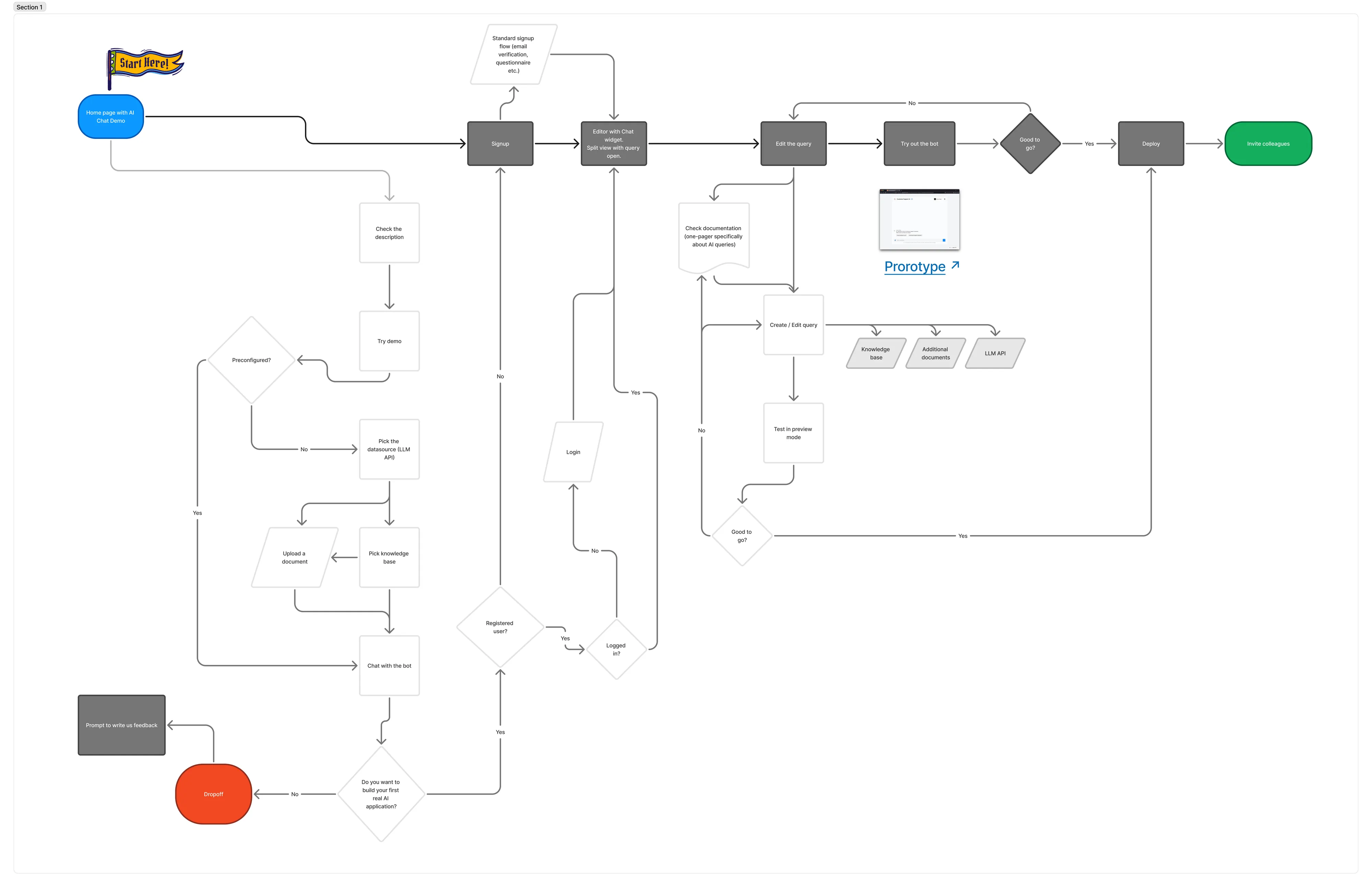
With no research to fall back on, the first thing I did was get everyone working from the same picture. I mapped the whole agentic flow: how a user’s request moved through the agent, the data sources, and the system. That gave stakeholders and engineering one clear direction to agree on before I started designing screens.
Redesigning the chat
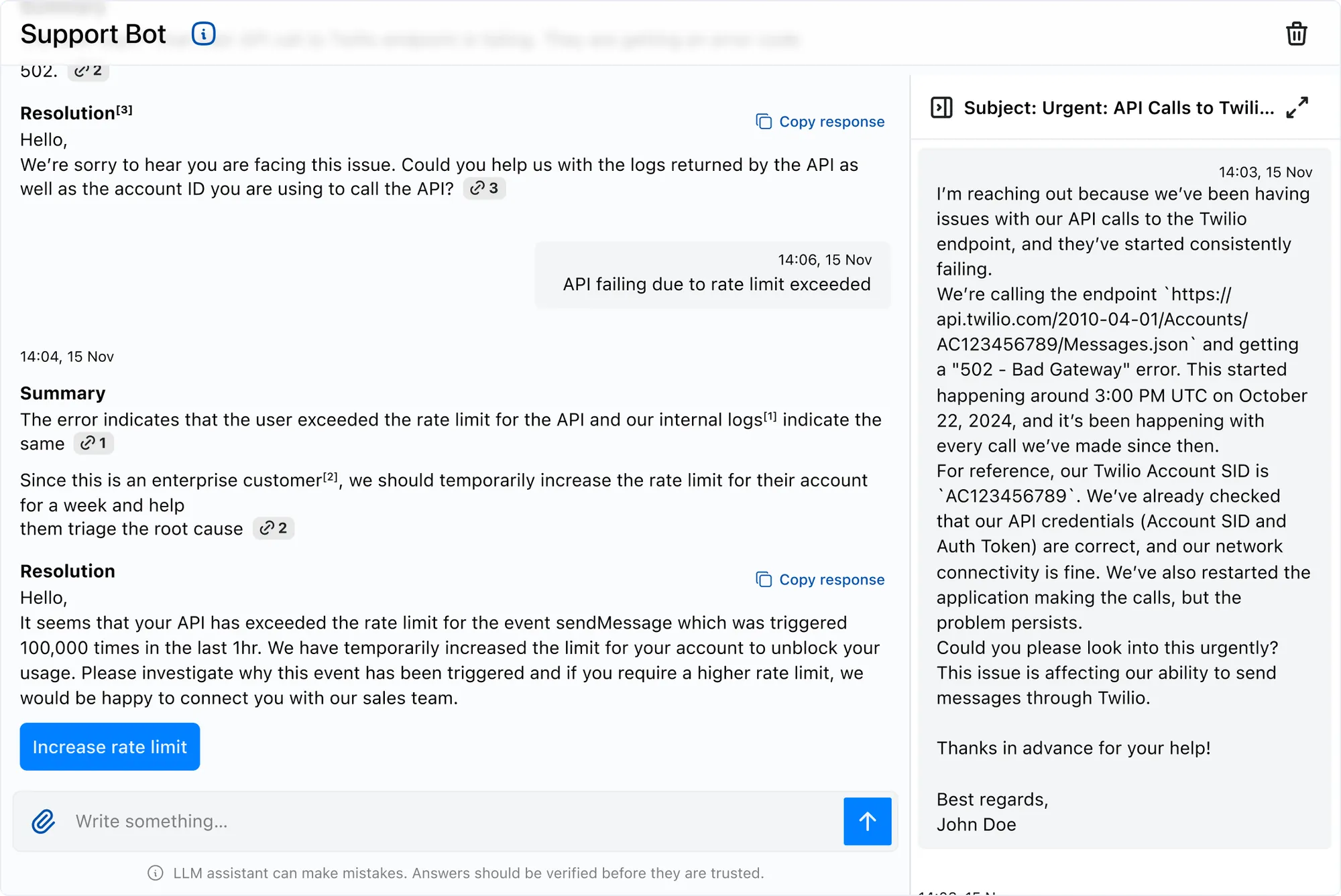
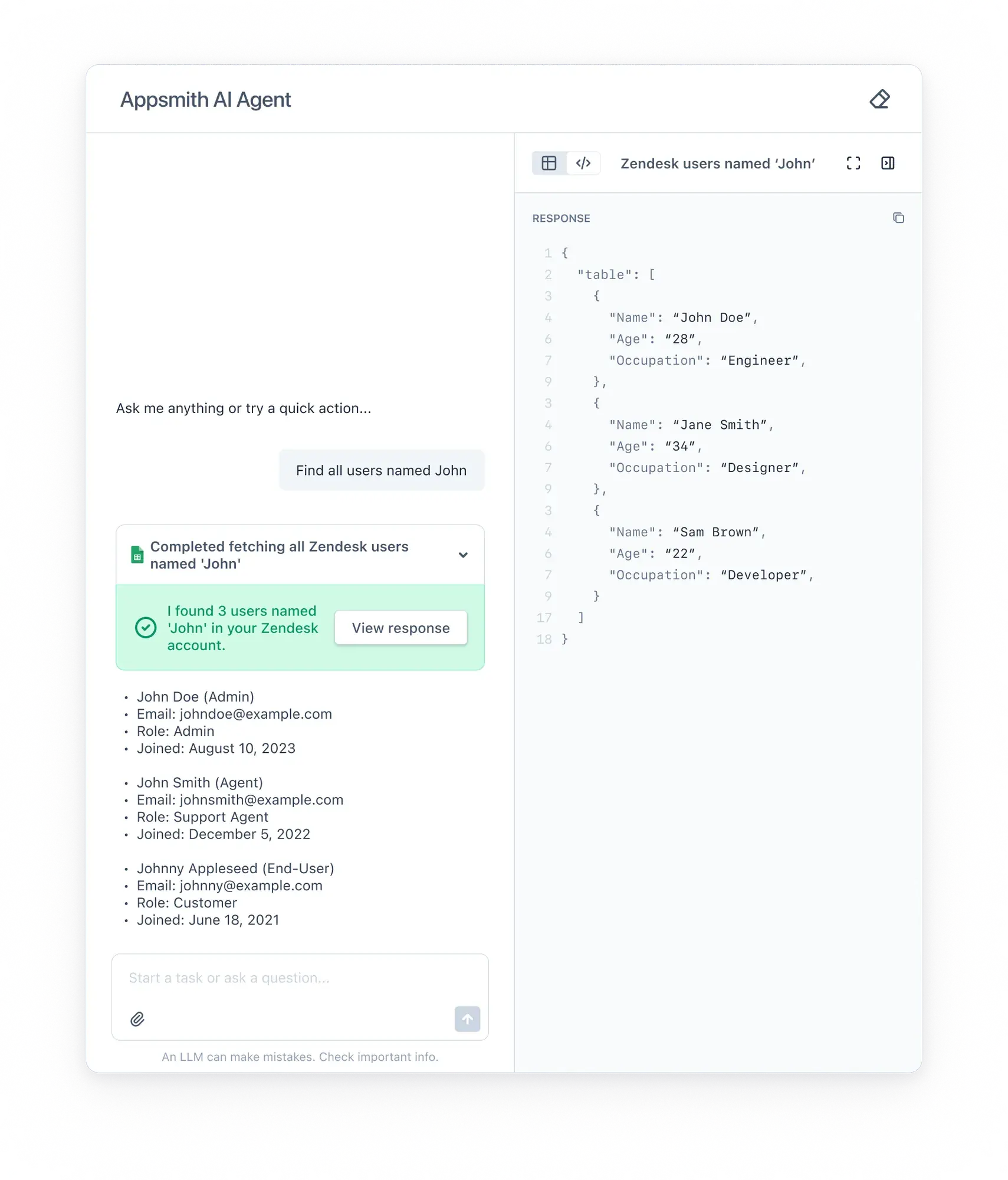
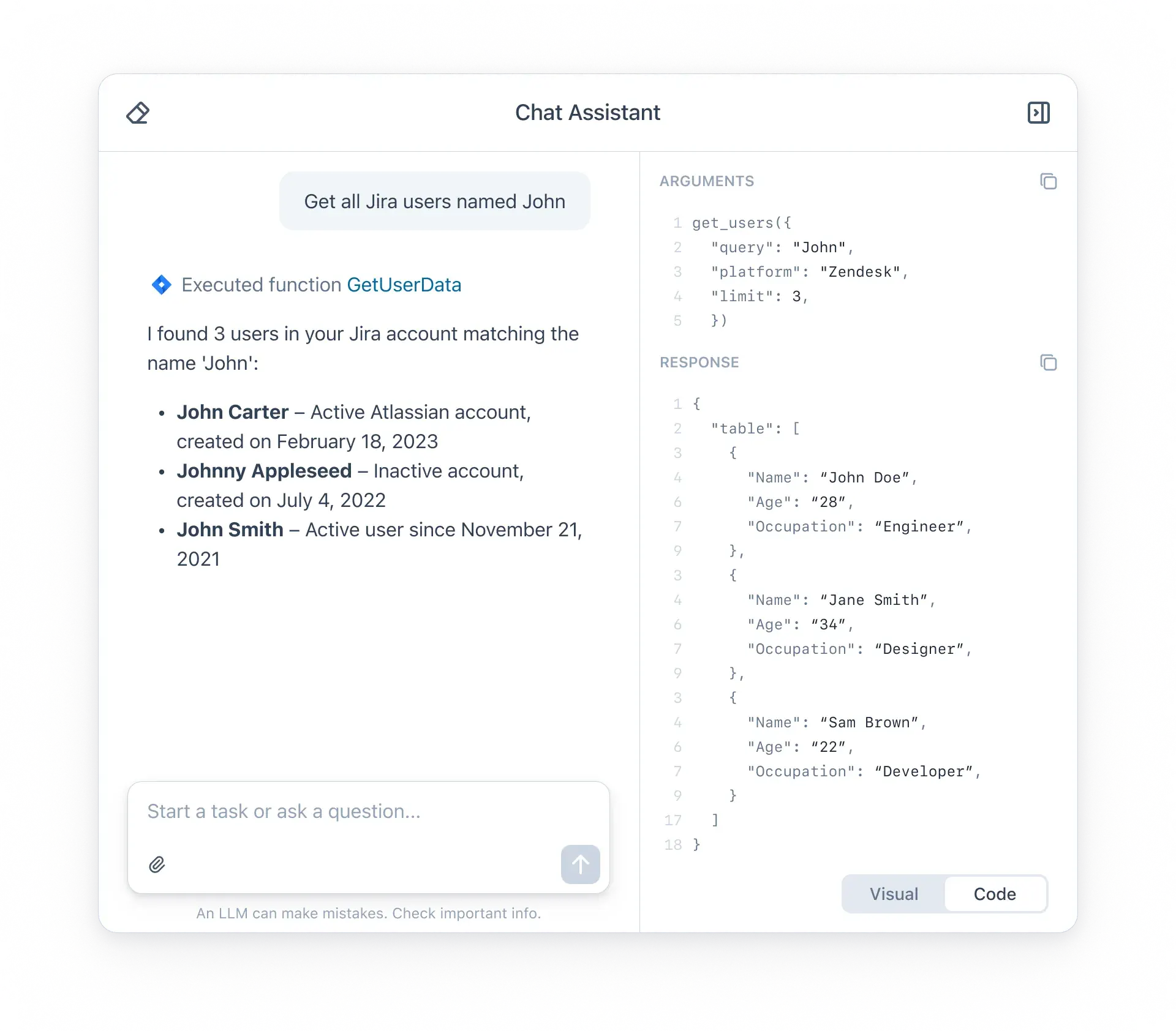
Once the flow was agreed, I took on a visual redesign of the chat, the main place users would talk to their agent. I started from the existing design and improved it in steps, raising the quality until it held up next to the other AI tools people were starting to use every day.
Bringing the agent into the IDE
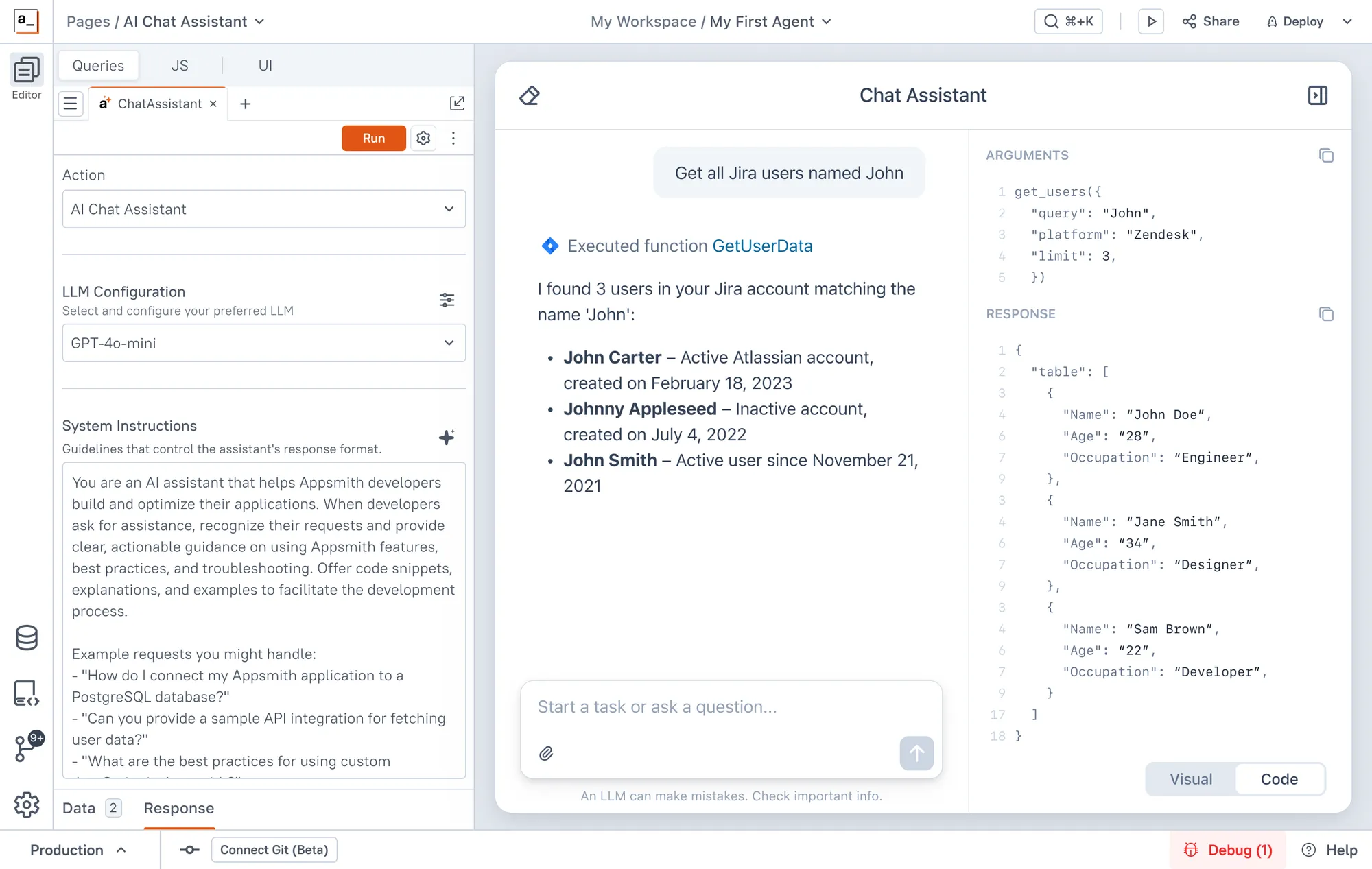
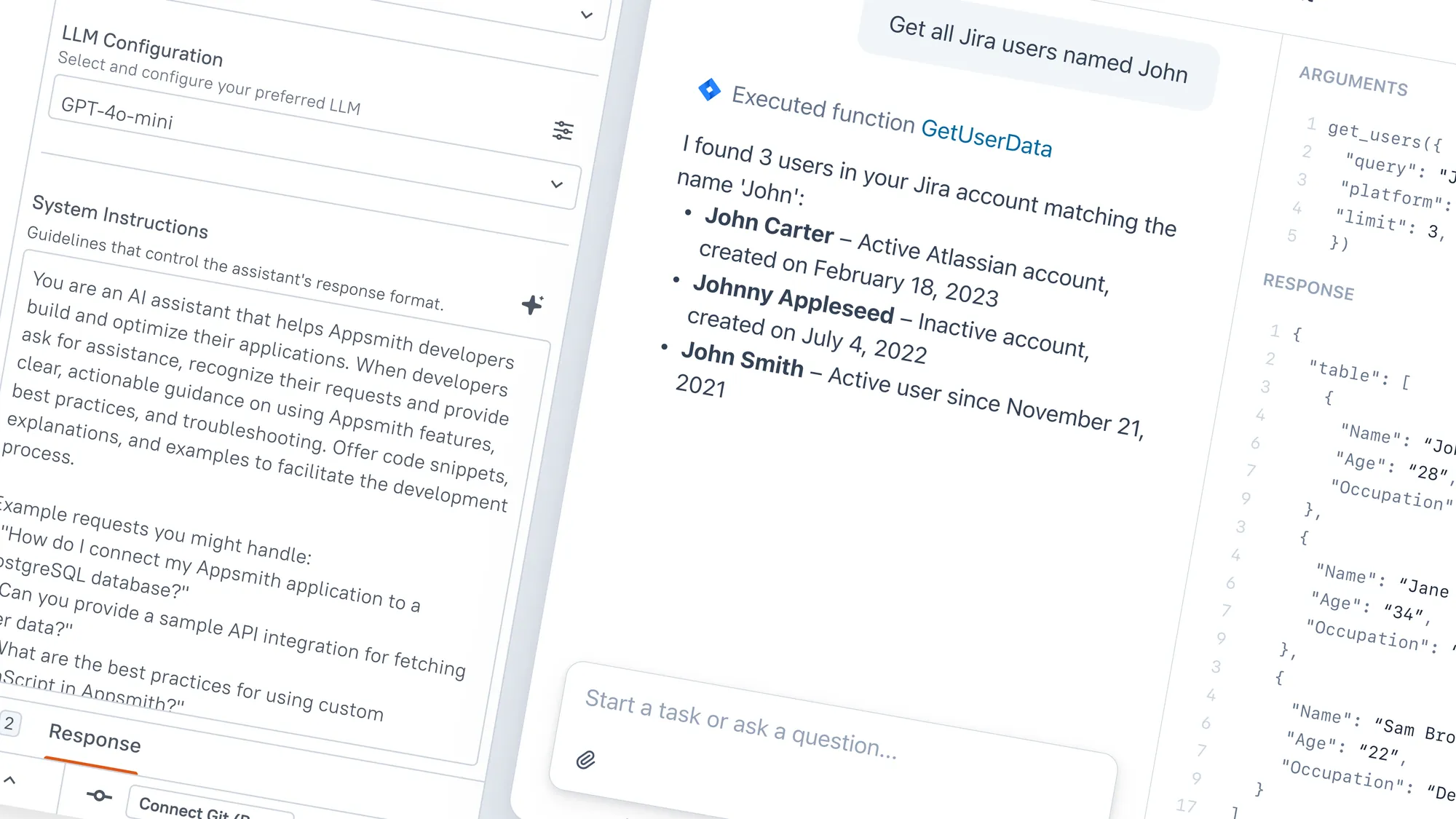
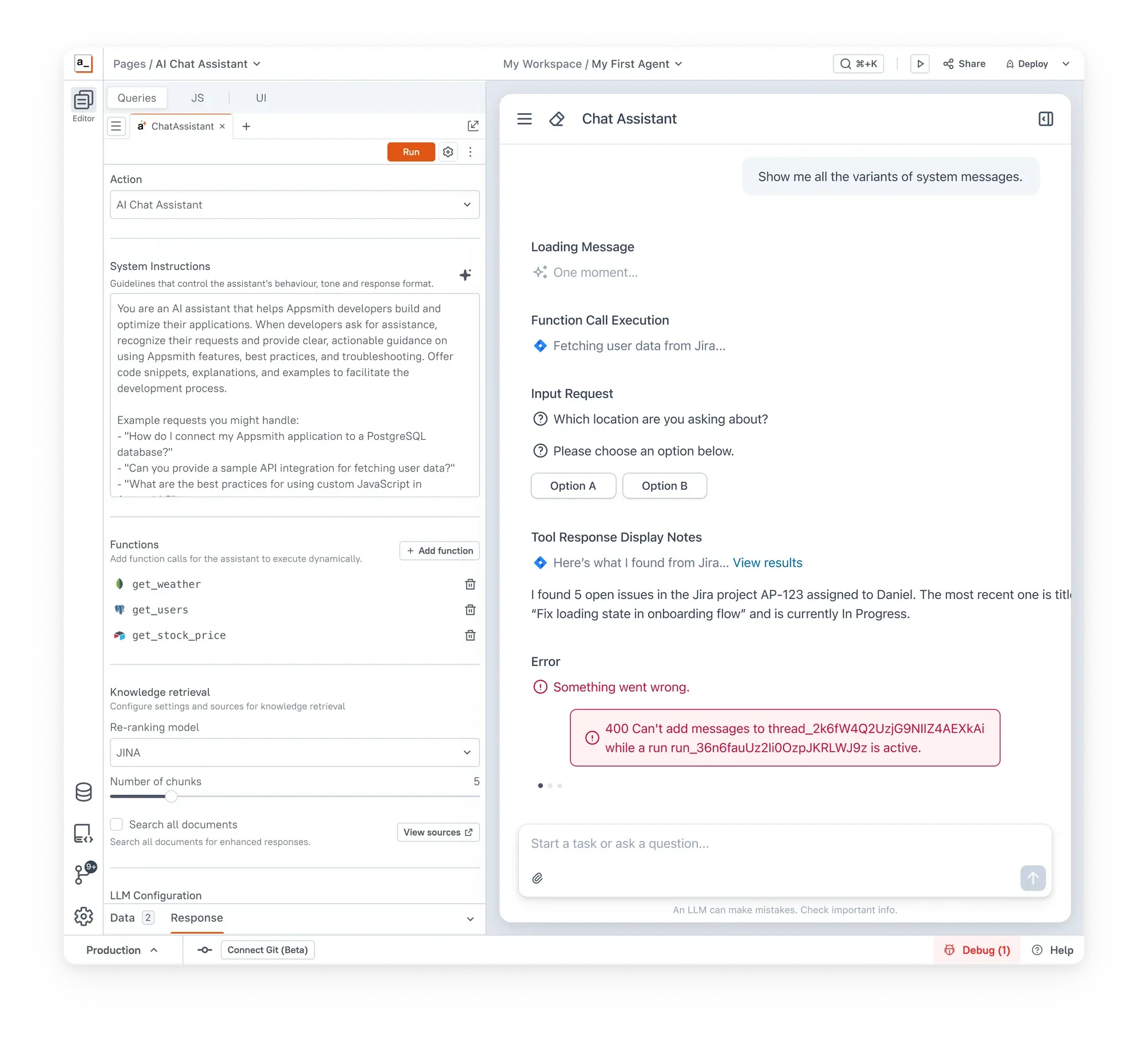
Chat was only half of it. The agent also had to be set up, so I brought the configuration into the IDE: system instructions, the functions an agent could call, which LLM to run, and which re-ranking model to use.
Function calling was the important part. It was how an agent reached into a user’s existing data to read and change it, so I designed its UI carefully, so users could see what the agent was doing to their data and stay in control.
Launch
We shipped Agents in May 2025, a short timeline for something this involved. It was clean and it worked. Appsmith had its first AI product out the door.
It didn’t find an audience. The product did what we built it to do, but the demand wasn’t there, and it was retired later on.